What is
Design?
Messy Reality of Designing
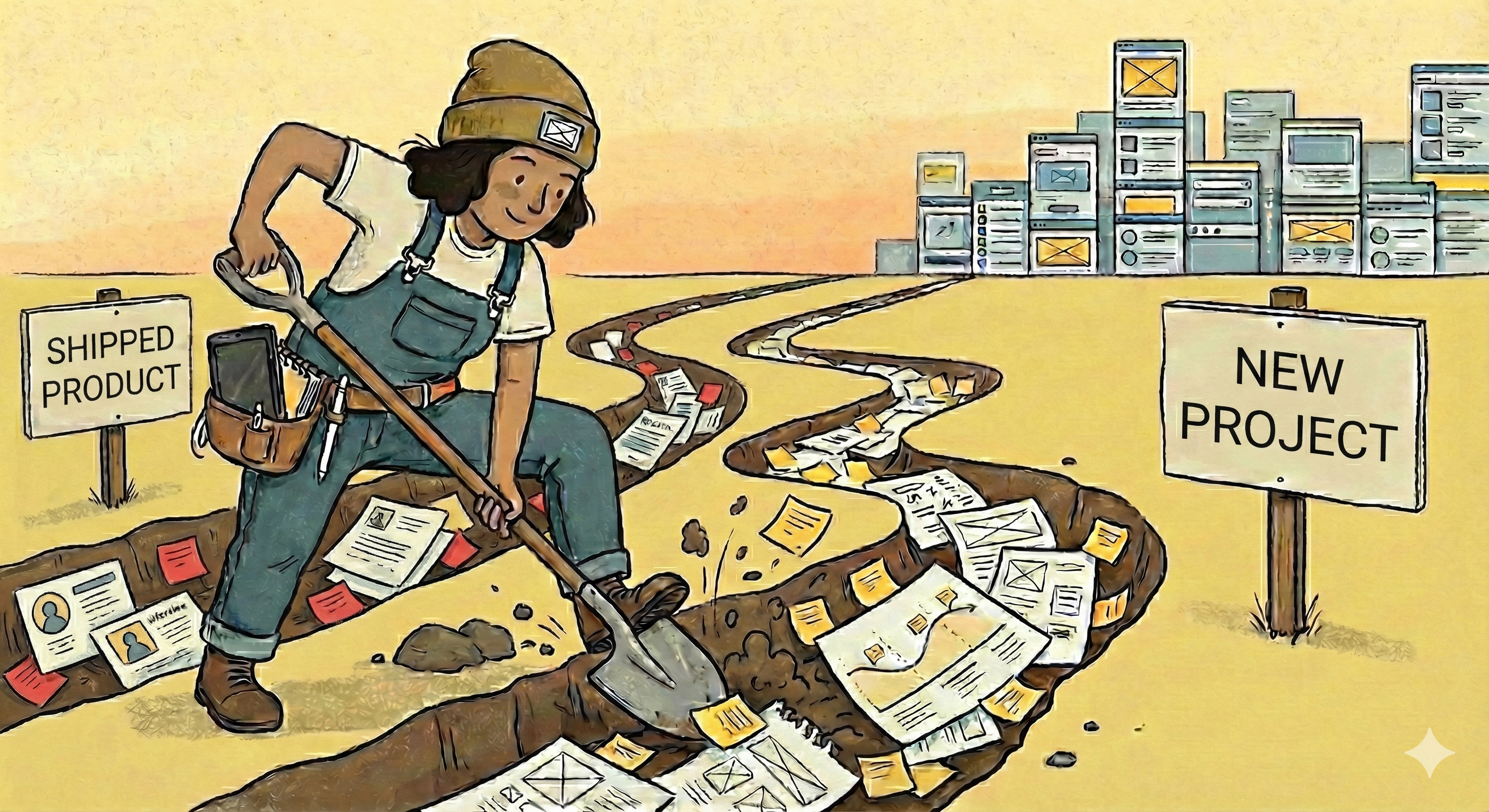
DIY usually means home projects or crafts. I've done my share of both, but I never imagined "DIY" would become my approach to professional design work. Turns out, I've had to teach myself most of what I know.
What I Expected Starting Out:
- Specialized teams for UI, research, and strategy
- Collaborating with multiple designers on every project
- User-first design as the guiding principle
- Recognition for thoughtful design solutions
The Reality:
- You're expected to do it all, UI, UX, research; lean teams are the norm now
- You might have one other designer, but most work happens solo
- Business constraints and limited resources usually win over user needs
- Good UX goes unnoticed when "functional" feels like enough
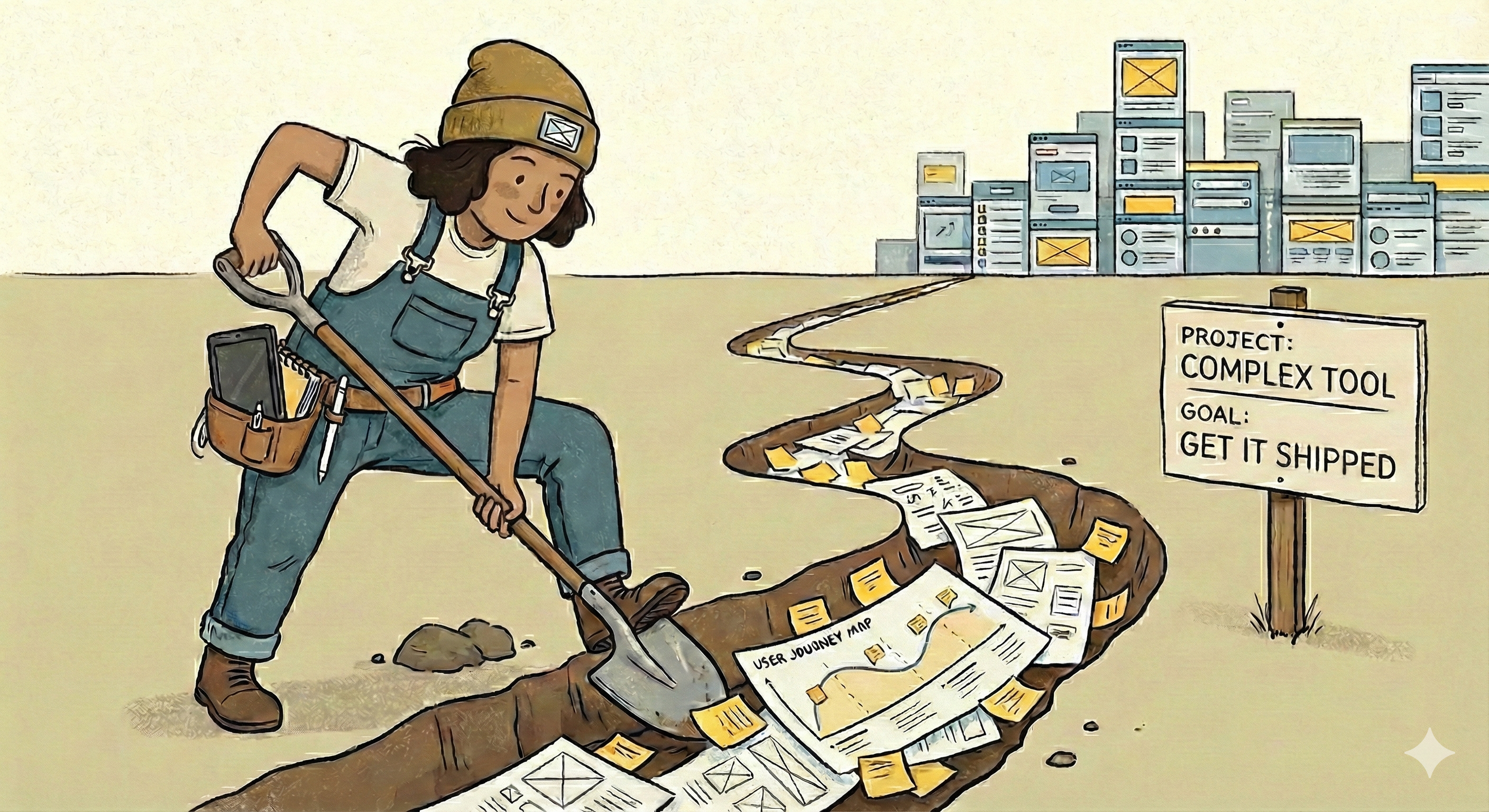
Working independently with vague requirements taught me to be resourceful and decisive. I could dwell on constraints such as tight deadlines, limited budgets, skeleton crews, or I could find creative ways to deliver. I chose to deliver.
How I DIY
Enterprise tools involve ambiguous requirements that emerge through discovery so I start with available data. No data? then talk directly to users or stakeholders to quickly move from ambiguity to clarity.
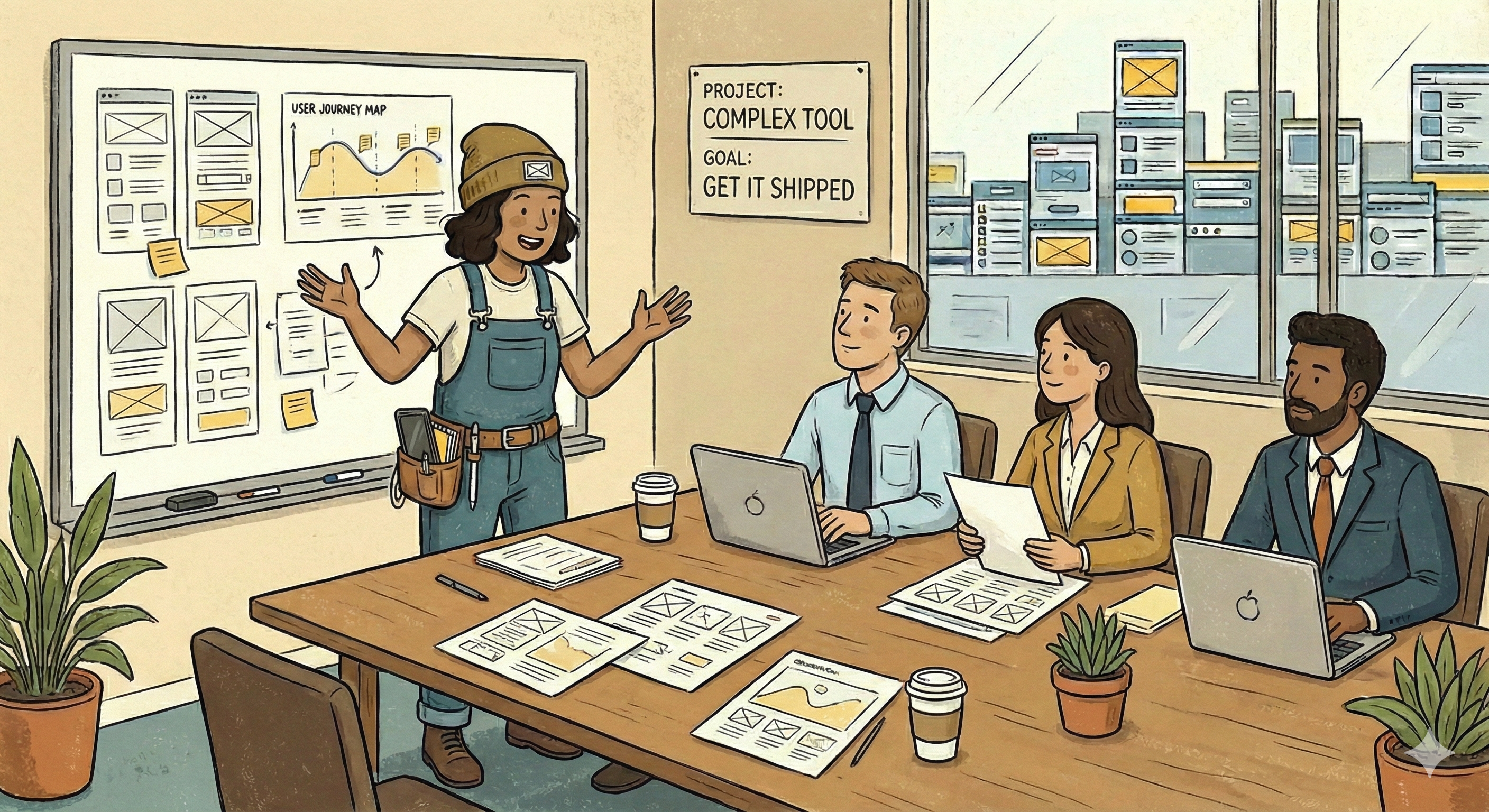
I skip traditional UX deliverables when timelines are tight. Once I grasp the problem, I move straight to design. Figma and AI coding tools give me the ability to prototype and iterate quickly.
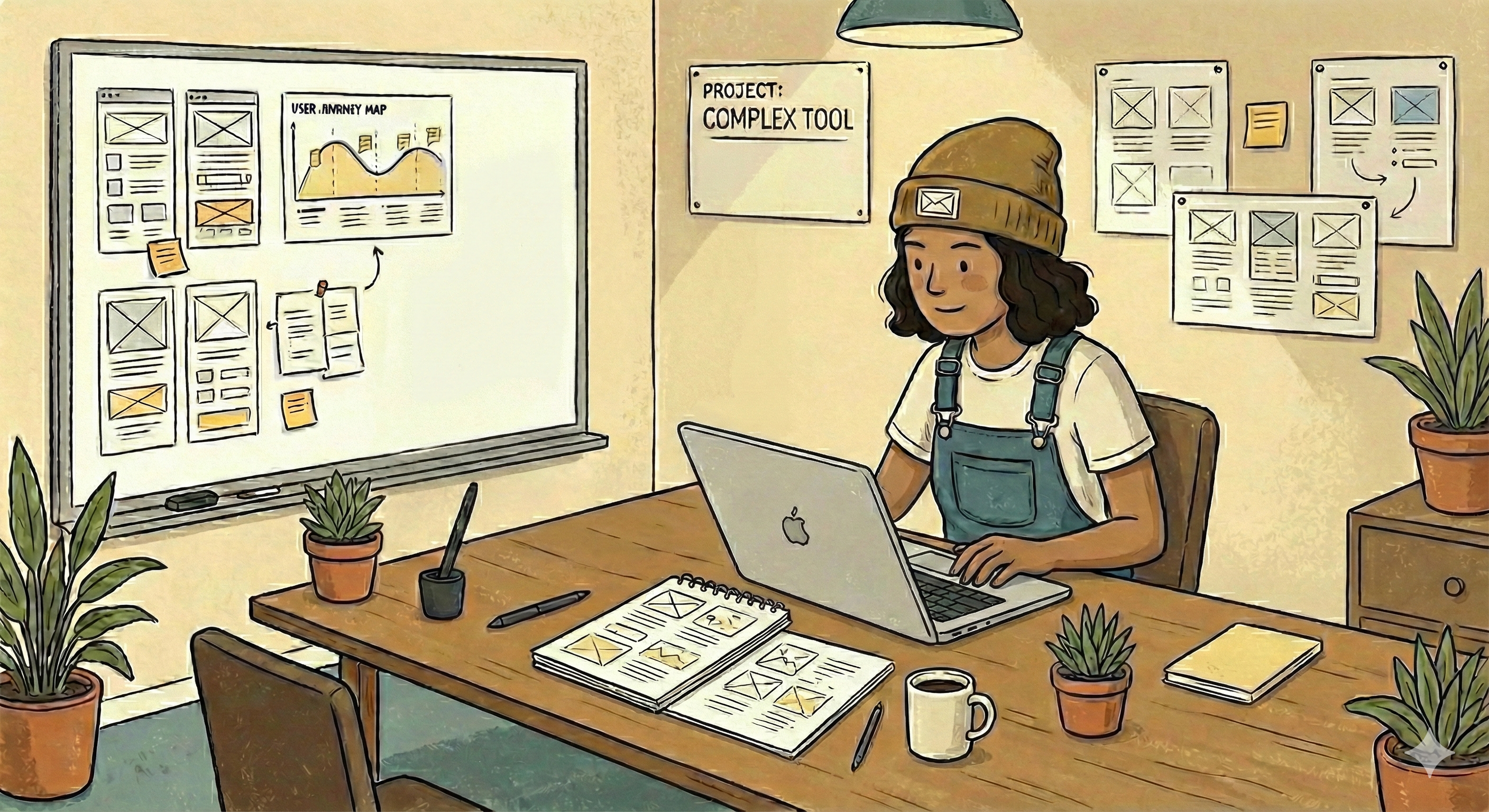
Without resources for formal user test sessions, I leverage the relationships built during discovery: running quick feedback sessions with those same users and iterating rapidly based on their input.
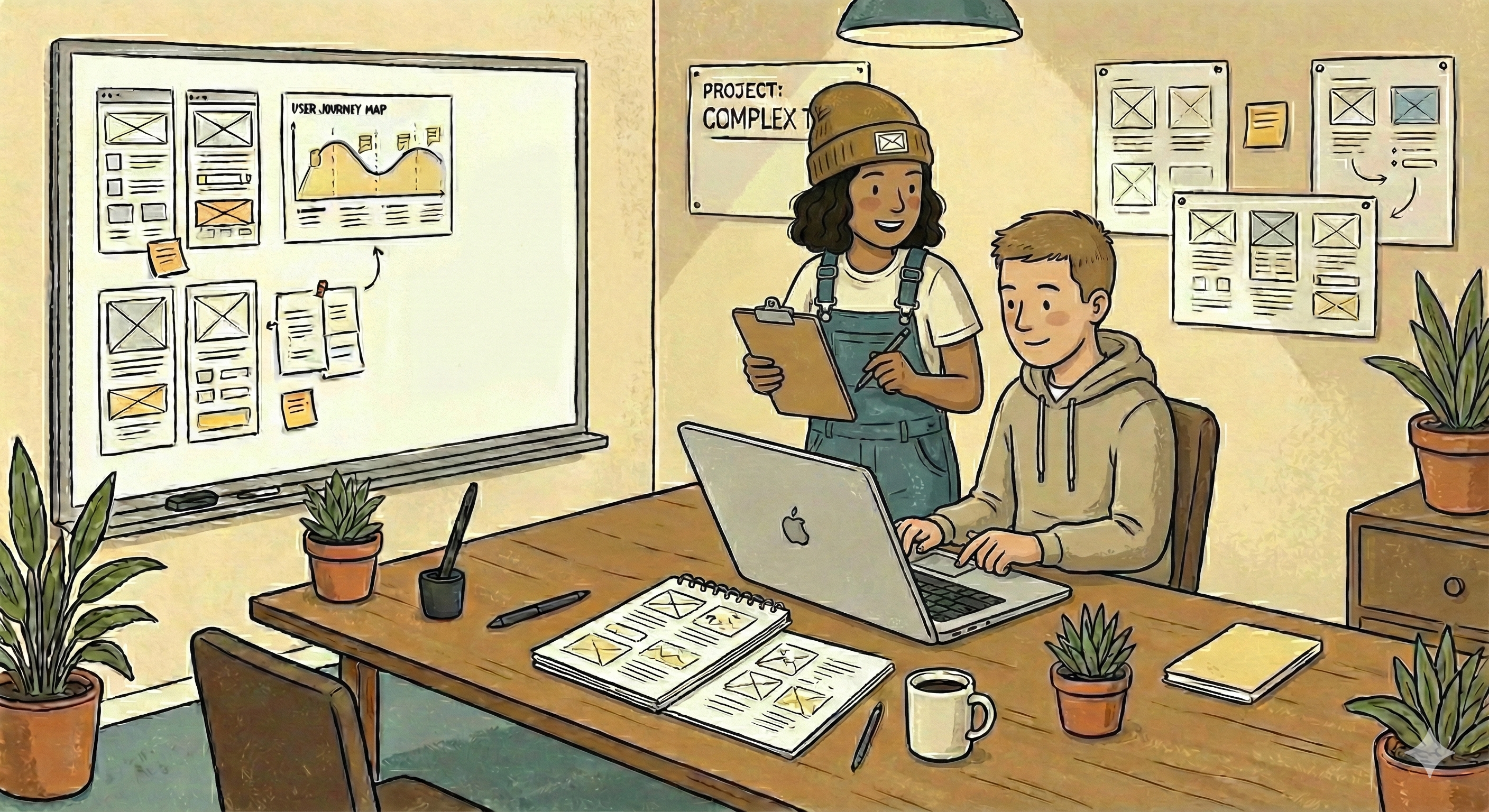
I get feedback from product and engineering to validate feasibility. Features often get descoped due to time, complexity, or backend constraints. I iterate until we land on something shippable that stays true to the user's core needs.
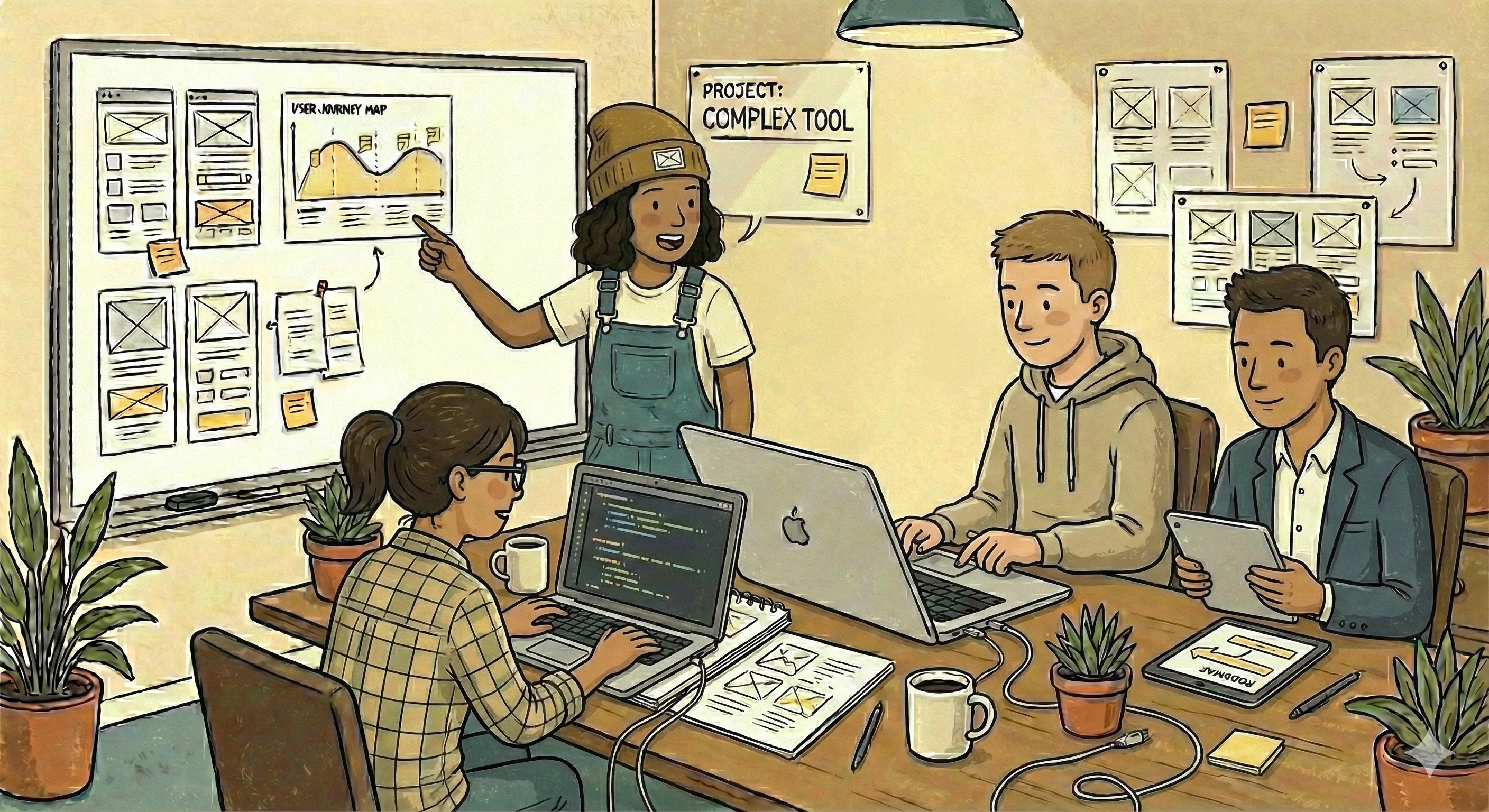
After launch, post-release iterations are a luxury, not a given. Regardless, there's always another tool or feature with new constraints to solve creatively, and back to discovery I go (it keeps things interesting!).